
A mattress traps sweat, dead skin cells, dust particles, body oils, and allergens every single night. Without regular cleaning, these substances accumulate and degrade both the comfort and hygiene of your bed. Cleaning a mattress improves indoor air quality, supports healthier sleep, and helps the mattress last longer.
This complete step-by-step guide explains how to clean a mattress effectively — removing stains, neutralising odours, and reducing allergens using simple tools and methods that are safe for all mattress types.
Table of Contents
Why You Must Clean Your Mattress Regularly
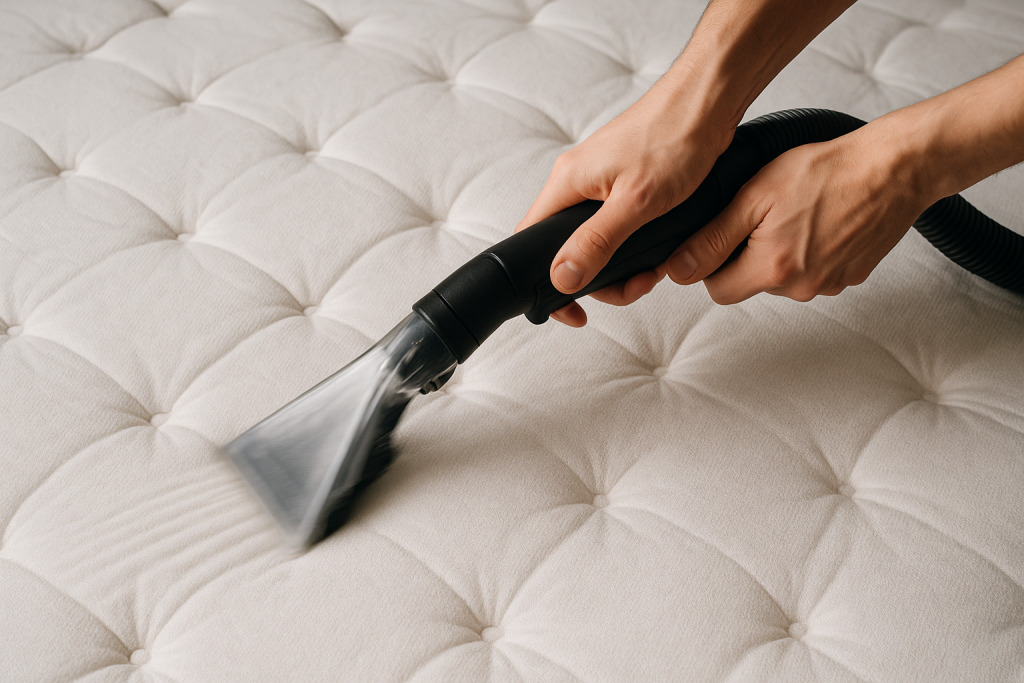
Mattresses operate as passive filters for your skin, hair, and surrounding environment. Cleaning them is not optional if you want long-term hygiene and comfort. Here are four key reasons to clean your mattress every few months:
1. Improved Hygiene
Body fluids, hair, and natural oils soak into mattress layers over time. Sweat and skin flakes encourage bacterial activity and mild fungal growth.
2. Allergen Reduction
Mattresses contain conditions ideal for dust mites. These microscopic pests feed on skin cells and produce waste that aggravates allergies and asthma symptoms.
3. Better Sleep Quality
A clean bed leads to improved sleep because of fewer irritants and better airflow. Eliminating odours and debris can reduce nighttime restlessness caused by allergies or poor air quality.
4. Longer Mattress LifespanMoisture and dirt break down foam and fibers. Regular maintenance prevents internal deterioration, preserving shape and support.
Frequency matters: Clean your mattress every 6 months. If you have pets, children, or dust allergies, clean it every 3 months.
What You Need to Clean a Mattress
Assemble these supplies before starting the cleaning process:
- Vacuum cleaner with upholstery brush
- Baking soda (1–2 cups depending on mattress size)
- Mild liquid detergent or dish soap
- Enzyme cleaner (for organic stains like urine or sweat)
- Clean cloths or sponges
- Spray bottle
- White vinegar (optional, for deeper cleaning)
- Essential oils (optional, for natural scent)
These materials are safe for foam, latex, and innerspring mattresses if used correctly.
How to Clean a Mattress: Step-by-Step Process
Follow these seven cleaning steps in sequence for optimal results:
Step 1: Strip the Bedding
Remove all bedding, including sheets, pillowcases, blankets, mattress protectors, and toppers. Place all items in the washing machine. Use hot water if the fabric allows, as this helps eliminate mites and bacteria.
Tip: Wash pillows and covers at least once every two months.
Step 2: Vacuum the Surface
Attach the upholstery tool to your vacuum. Run it slowly over the entire surface of the mattress. Pay extra attention to:
- Seams and piping
- Corners
- Edges and crevices
This process removes surface-level dust, hair, crumbs, skin flakes, and potential allergens.
Vacuum underneath the mattress if your frame allows. Rotate the vacuum tool in multiple directions to dislodge trapped particles.
Step 3: Spot Clean Visible Stains
Identify stains before deodorising the mattress. Target organic stains such as:
- Urine
- Sweat
- Blood
- Food spills
For Biological Stains (Urine, Blood, Sweat):
Use an enzyme cleaner. Spray the cleaner onto a clean cloth — not directly on the mattress. Dab gently, then blot with a dry cloth. Repeat until the stain lightens.
DIY Option:
Mix 1 teaspoon of dish soap with 1 cup of warm water. Dip a cloth into the solution. Blot the stain gently. Then, use another clean damp cloth to remove soap residue.
Avoid soaking the mattress. Excess moisture increases the risk of mildew and mold.
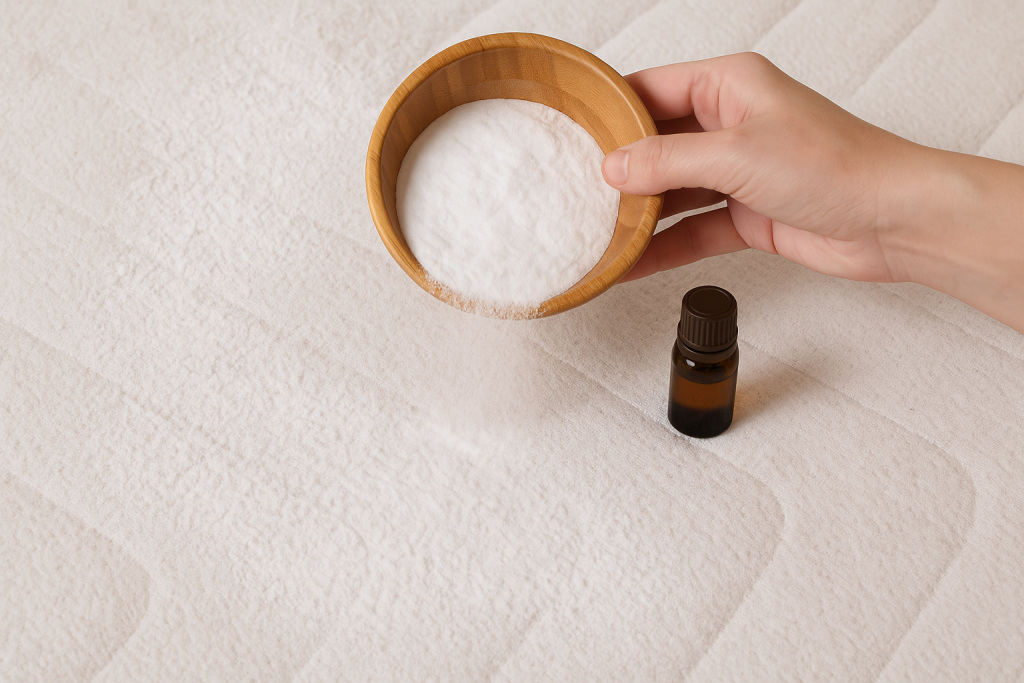
Step 4: Apply Baking Soda
Sprinkle baking soda evenly over the entire mattress. Use approximately 1–2 cups for a queen-sized bed.
Let it sit for 6 to 8 hours. Baking soda absorbs moisture, body odours, and volatile organic compounds (VOCs) that cause musty smells.
Optional: Mix 5–10 drops of essential oil (e.g., lavender or eucalyptus) into the baking soda before applying. This adds a subtle natural fragrance.
Step 5: Vacuum Again
After baking soda has absorbed odours and moisture, vacuum the entire mattress a second time. Ensure you remove all powder from seams and edges.
This step leaves the mattress fresh and dry, with no lingering residue.
Step 6: Flip or Rotate the Mattress
Not all mattresses are designed to be flipped, but most benefit from rotation. Check your manufacturer’s label.
- Single-sided mattresses: Rotate head-to-foot every 3–6 months.
- Double-sided mattresses: Flip and rotate every 6 months.
Rotating reduces uneven pressure and extends the usable life of the mattress.
Step 7: Let It Air Out
Expose your mattress to fresh air for at least 3 hours. Outdoor sun is best. Direct sunlight helps kill bacteria and reduce humidity trapped inside foam or padding.
If outdoor airing isn’t possible, open windows and place fans in the room to promote airflow.
For reliable and thorough cleaning services, please contact our team to discuss your requirements.
Mattress Cleaning Do’s and Don’ts
Recommended:
- Use a waterproof mattress protector to prevent liquid damage.
- Clean small spills immediately before they soak in.
- Vacuum the mattress once per month if you have allergies.
- Let your mattress fully dry before replacing bedding.
Avoid:
- Using bleach or harsh chemicals — they degrade fabric and foam.
- Applying too much water — excess moisture causes mildew.
- Ignoring your pillows — they also require regular washing.
How to Clean Different Mattress Types
Memory Foam
Memory foam is highly absorbent. Avoid using liquid sprays directly on the foam. Use a damp cloth with mild detergent and dab stains gently. Let the surface dry completely before reuse.
Latex
Latex mattresses resist moisture but still require light cleaning. Use a cloth dampened with mild soap and water. Wipe the surface gently. Do not use vinegar or baking soda directly on latex foam.
Hybrid and Innerspring
Use a vacuum to clean the surface and crevices. Spot treat with enzyme cleaner as needed. These mattresses may be flipped depending on the construction. Always follow manufacturer instructions.
Mattress Cleaning Schedule
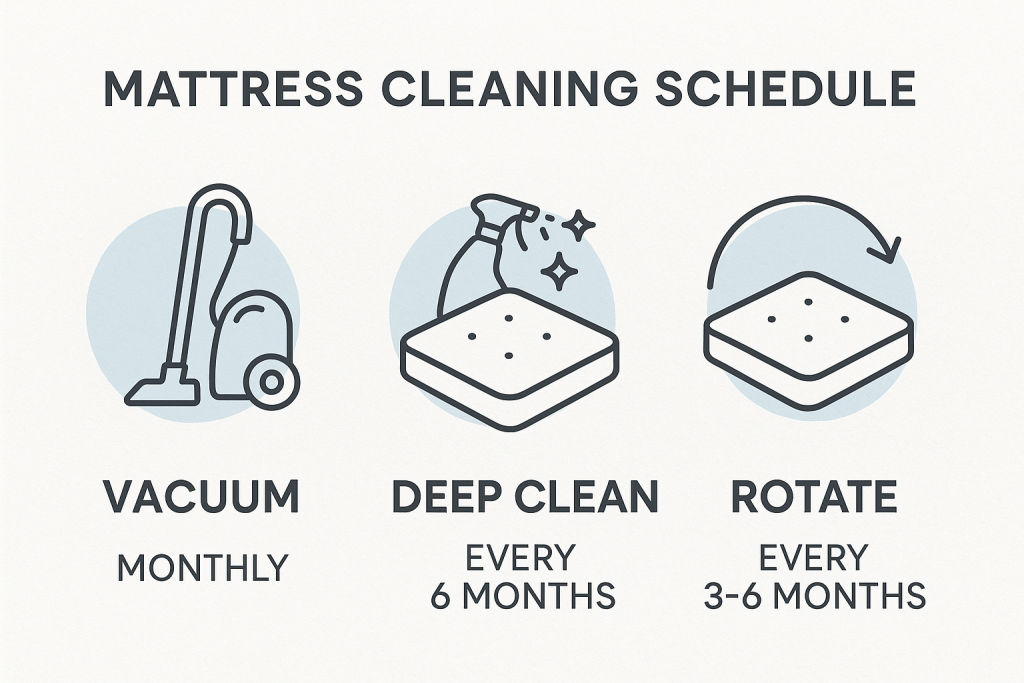
| Task | Frequency |
| Vacuum Surface | Every Month |
| Spot Clean Spills | Immediately as needed |
| Full Deep Clean | Every 6 Months |
| Rotate or Flip Mattress | Every 3–6 Months |
| Replace Mattress | Every 7–10 Years |
Frequently Asked Questions
Can I use a steam cleaner on my mattress?
No. Steam injects moisture deep into the layers, increasing the risk of mould growth, especially in foam mattresses.
Can I clean a mattress with vinegar?
Yes, with caution. Mix equal parts white vinegar and water. Lightly mist stained areas and blot immediately. Avoid soaking any part of the mattress.
What’s the best way to remove sweat stains?
Use an enzyme cleaner or a paste of baking soda and hydrogen peroxide. Apply to the stain, let sit for 30 minutes, then blot clean.
Final Thoughts
A clean mattress supports better sleep, reduces allergens, and extends its usable life. Following a regular cleaning schedule prevents buildup of bacteria, moisture, and dust.
If your mattress has deep stains or has never been cleaned, hiring a professional mattress cleaning service can be effective. These services use low-moisture, high-suction tools designed for mattress fabrics and foams.
Maintain cleanliness between deep cleanings by using a mattress protector, washing your sheets weekly, and vacuuming monthly.