
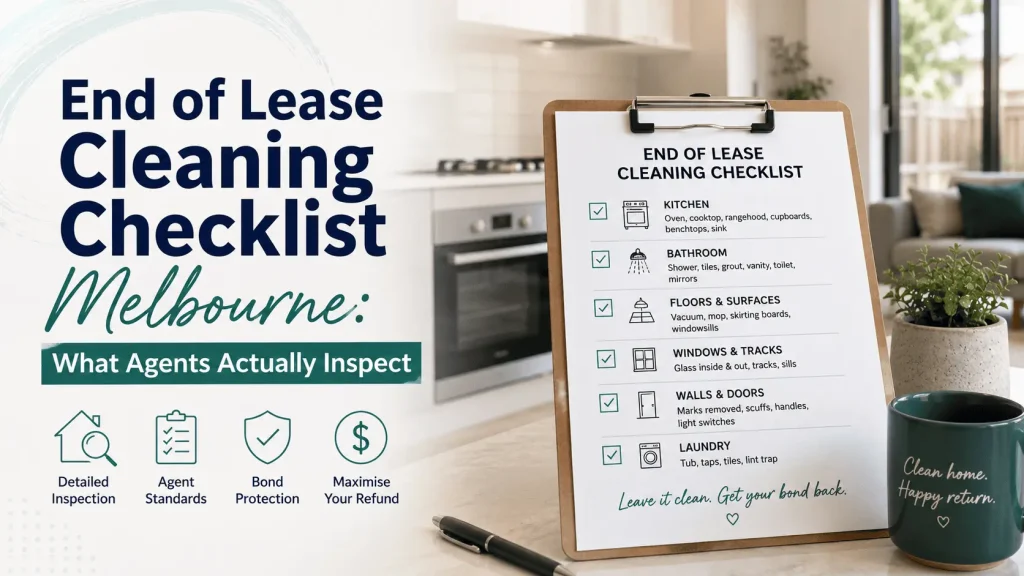
The final inspection is not a casual walkthrough. Melbourne property managers work from a checklist, they cross-reference it against your entry condition report, and they are specifically looking for the things most renters overlook.
According to the RTBA’s 2023–24 Annual Report, 36% of Victorian renters did not receive their full bond back. Cleaning is consistently the most common reason. Not damage. Not unpaid rent. Cleaning -and specifically, the areas that renters either rush through or forget entirely.
This checklist covers every area Melbourne agents inspect at the final walkthrough. Work through it before your inspection and your bond has a far better chance of coming back in full.
How the Final Inspection Works in Melbourne
Before the room-by-room breakdown, it helps to understand what the agent is actually doing during the inspection.
The property manager arrives with your entry condition report – the document completed when you first moved in. Their job is to compare the current condition of the property against that baseline, accounting for fair wear and tear. They are not expecting a brand-new property. They are expecting one that is in substantially the same condition as when you moved in.
What this means in practice:
- If the oven was clean at move-in, it must be clean at move-out
- If the carpet had no visible stains at move-in, visible stains at move-out are a problem
- If the condition report noted that bathroom grout was clean, grout that’s now mouldy is a deduction risk
- If you documented a pre-existing issue at move-in (a scuff mark, a chip, a stain), that issue cannot be charged to you at move-out
The agent is looking for the gap between what was recorded then and what they’re seeing now. Most failures come not from obvious grime but from the details inspections are specifically designed to catch – window tracks, exhaust fans, inside cupboards, rangehood filters.
Work from top to bottom, room by room. Don’t start mopping floors before you’ve cleaned the ceiling fans. Debris falls down.
Room-by-Room Checklist
🍳 Kitchen – The Highest-Risk Room
The kitchen is where the majority of Melbourne renters lose bond money. The oven alone is the single most disputed item in Victorian bond inspections. Baked-on grease hardens over months and becomes significantly harder to remove – which is why leaving it until move-out creates a problem that’s difficult to solve under time pressure.
Oven
- Interior walls – all grease and food residue removed
- Oven racks – degreased (see our guide on how to clean oven racks)
- Oven door glass – inside and outside, no smearing
- Bottom tray / drip tray – emptied and wiped
- Oven exterior – wiped down including control knobs
Rangehood
- Filters – degreased or replaced (this is the most forgotten item in the kitchen)
- Fan grill – cleaned
- Exterior – wiped, no grease residue
Stovetop / Cooktop
- Burners and grates – removed and cleaned individually
- Drip trays (if applicable) – soaked and scrubbed
- Surrounding surfaces – degreased
Remaining Kitchen
- Rangehood (exterior) – wiped down
- Microwave – interior, exterior, and top surface
- Dishwasher – filter removed and cleaned, interior wiped, door seal scrubbed
- Refrigerator (if included with the property) – interior shelves, drawers, door seals, and exterior
- All cupboards – inside and outside including handles and hinges
- Drawers – emptied and wiped inside
- Benchtops – fully cleared and wiped, including the areas behind and underneath appliances
- Splashback – degreased and cleaned
- Sink – scrubbed and descaled, plughole and drain cleared
- Tapware – descaled and polished
- Exhaust fan – grill removed and cleaned
- Floor – swept, mopped, and cleaned under and behind appliances
💡 Clean & Co Note: Our oven cleaning service is one of the most booked add-ons to end-of-lease cleans across Melbourne. Professionally removing heavy baked-on grease takes specialist products and time that most renters don’t have in the final days of a move. If your oven is in bad shape, it’s worth addressing this before – not after – the inspection.
🚿 Bathrooms – The Second Highest Failure Area
Agents are methodical in bathrooms. Soap scum on shower screens, mould in grout lines, scale on tapware, and grime under the toilet rim are the four most commonly flagged issues.
Shower / Bath
- Shower screen – soap scum and limescale removed, no streaking
- Screen frame and tracks – often overlooked, always checked
- Tiles – scrubbed, especially grout lines
- Silicon seals – mould removed or replaced if badly discoloured
- Bath (if applicable) – interior, exterior, overflow drain, and taps
Toilet
- Bowl interior – under the rim (use a toilet brush and let cleaning product sit)
- Cistern – exterior wiped
- Seat – both sides, and the hinges
- Base – floor around the toilet base is frequently checked
Vanity and Tapware
- Basin – scrubbed and descaled
- Tapware – polished, no calcium scale
- Mirror – streak-free
- Vanity unit – inside cupboard and drawers, exterior, handles
Often Forgotten in Bathrooms
- Exhaust fan – one of the most commonly failed items in Melbourne inspections. Remove the grill and clean the blades and housing
- Towel rails – wiped down
- Floor – mopped including corners and behind the toilet
- Walls – any soap splatter or mould spots removed
🛏 Bedrooms
Bedrooms are generally lower risk than kitchens and bathrooms, but several items are specifically checked.
- Built-in wardrobe interiors – shelves wiped, rails wiped, floor swept
- Wardrobe doors – front and tracks
- Ceiling fan – blades wiped both sides (don’t use a damp cloth on the motor housing)
- Light fittings – cleaned and bug-free
- Skirting boards – full perimeter, wiped or vacuumed
- Walls – any marks, scuffs, or sticky residue (tack, blu-tack, adhesive strips) removed
- Door handles, doors, and frames – both sides
- Carpet – vacuumed thoroughly, stains treated (see our carpet cleaning service for heavily soiled carpet)
- Hard floors (if applicable) – swept and mopped
- Power points and light switches – wiped (these are commonly checked)
🛋 Living and Dining Areas
- Ceiling fans and light fittings – cleaned
- Skirting boards – entire perimeter
- Walls – marks, scuffs, adhesive residue removed
- Carpet or hard floors – vacuumed/mopped including under furniture positions
- Sliding door tracks (if applicable) – dirt and debris removed
- Air conditioning unit (if applicable) – filters removed and cleaned, exterior wiped
- Fireplace (if applicable) – grate cleaned, surround wiped
- Power points and light switches – wiped
🧺 Laundry
- Washing machine (if included) – drum wiped, seal cleaned, exterior wiped
- Dryer (if included) – lint filter emptied and cleaned, drum wiped, exterior wiped
- Tub or sink – scrubbed and descaled
- Tapware – descaled and polished
- Shelving and cabinetry – inside and outside
- Floor – swept and mopped
- Exhaust fan – cleaned
🪟 Windows – A Commonly Underestimated Item
Windows are inspected both for glass cleanliness and for frame and track condition. Dirty windows make an otherwise clean property look neglected, and agents notice them immediately.
- Glass – both sides, streak-free
- Window frames – wiped down, inside and outside
- Window tracks – debris, dust, and grime removed (use a toothbrush or small brush)
- Fly screens – wiped or rinsed
- Blinds – dusted (horizontal slats individually), or cleaned according to material type. For curtains, check your entry condition report for whether they were washed or dry-cleaned at move-in
For guidance on DIY window cleaning, see our post on how to clean windows. For professional results before inspection, our window cleaning service covers Melbourne properties inside and out.
🏠 Outdoor Areas, Garage, and Shed
Outdoor areas are frequently left until last – and sometimes not done at all. Agents check them.
- Balcony or patio – swept, wiped, cobwebs removed
- Garage floor – swept and cleared of personal belongings
- Shed (if included) – emptied and swept
- Bins – emptied and cleaned
- Garden paths – swept
- Cobwebs – remove from all external corners, under eaves, around light fittings
- Front door and entry area – swept, door wiped
Note: Garden maintenance (mowing, weeding) is generally separate from cleaning and may be covered under a ground maintenance obligation in your lease rather than the cleaning standard. Check your specific lease terms.
The Areas Melbourne Renters Miss Most Often
Based on what consistently comes up in Melbourne bond disputes and re-clean requests, these are the items that catch renters off guard:
- Rangehood filters. Rarely cleaned during tenancy. By move-out, grease has built up on mesh filters that require soaking in degreaser, not just wiping.
- Exhaust fans. Both kitchen and bathroom exhaust fans accumulate dust and grease. Most renters either forget or don’t know they can (and should) remove the grill to clean properly.
- Window tracks. Visually obvious to an agent during inspection. Requires a brush or toothbrush to clear compacted dust and debris from the channels.
- Inside cupboards and wardrobes. Agents open doors. Dust, crumbs, and grime in shelving are flagged consistently.
- Oven door glass. The interior of oven door glass – particularly the gap between panes on double-glazed doors – is a common failure point. It requires specific disassembly on some oven models.
- Skirting boards. Overlooked during regular cleaning and highly visible to an agent walking a room perimeter. Dust and grime accumulate at floor level over months.
- Shower screen edges and frames. Soap scum accumulates in the frame and base of shower screens and doesn’t come off with standard bathroom spray. It requires targeted product and scrubbing.
- Silicon seals. Pink or black mould on bathroom silicon seals is one of the most common reasons agents flag bathrooms. In severe cases, the silicon may need to be replaced rather than cleaned.
Before Your Inspection: A Practical Timeline
Two weeks before move-out: Book a professional cleaner if you’re going that route – availability tightens significantly at the end of the month when multiple leases turn over. Refer to how long an end-of-lease clean takes to plan your schedule.
One week before move-out: Start on the high-effort areas: oven, rangehood, bathroom silicon, and any carpet stains. These take time, product dwell time, and in some cases multiple passes.
48 hours before inspection: Final walkthrough using this checklist. Work top to bottom in each room. Vacuum after all other tasks are complete.
Day of inspection: Leave all lights on and open blinds. A well-lit property shows cleaning more clearly – which works in your favour if you’ve done the job properly. Take date-stamped photographs of every room before you leave.
DIY or Professional? What the Data Shows
DIY end-of-lease cleaning is a realistic option for a small, well-maintained property with a short tenancy. It becomes increasingly risky as:
- The property has more rooms, or more than one bathroom
- You’ve lived there for more than 18 months
- The oven, bathroom silicon, or carpets need significant attention
- Your move-out timeline is compressed
Industry data from cleaning professionals operating in Melbourne consistently shows that renters who use professional cleaners – particularly those who offer a re-clean guarantee – are significantly more likely to receive their full bond back than those who clean themselves. The guarantee matters: if an agent raises a cleaning issue after a professional clean, a reputable company will return and address it before a bond claim is lodged.
💡 Clean & Co Note: Our end-of-lease cleaning service covers every item on this checklist. Our cleaners are police-checked, insured, and trained specifically to Melbourne inspection standards – from oven interiors to exhaust fans to window tracks. The 100% satisfaction guarantee means that if your agent identifies a cleaning issue within the scope of our work, we come back at no cost to you. Book your end-of-lease clean →
Your Rights if Something Goes Wrong
If your rental provider raises cleaning issues after your final inspection:
- You have the right to know specifically what the issue is – your agent must give you itemised details, not a vague “it’s not clean enough.”
- You may be given a short window to re-clean – in practice, most Melbourne agents allow 24–72 hours. This is not guaranteed under the Act, but it is common practice.
- You can dispute a bond claim – if you believe a deduction is unreasonable, you can make a direct claim to the RTBA and contest it through RDRV or VCAT. Your entry condition report and dated photographs are your primary evidence.
- Deductions cannot be made for fair wear and tear – normal deterioration from ordinary use is the rental provider’s responsibility. This includes faded paint, minor wall marks, and carpet wear from foot traffic.
For a detailed breakdown of how the bond process works in Victoria – including the RTBA claim process and your rights in a dispute – see our Melbourne Renter’s Guide to Cleaning.
This checklist reflects the Consumer Affairs Victoria “reasonably clean” standard and general Melbourne property management practice. For legal advice specific to your tenancy, contact Consumer Affairs Victoria on 1300 55 81 81 or Tenants Victoria at tenantsvic.org.au.